Pinch Pleat
Fabric gathered into stitched groups at the top. The traditional, tailored heading — structured folds that hold their shape whether the panel is open or closed.
Fabric that softens a room, layered with sheers so you keep the daylight and the privacy both.
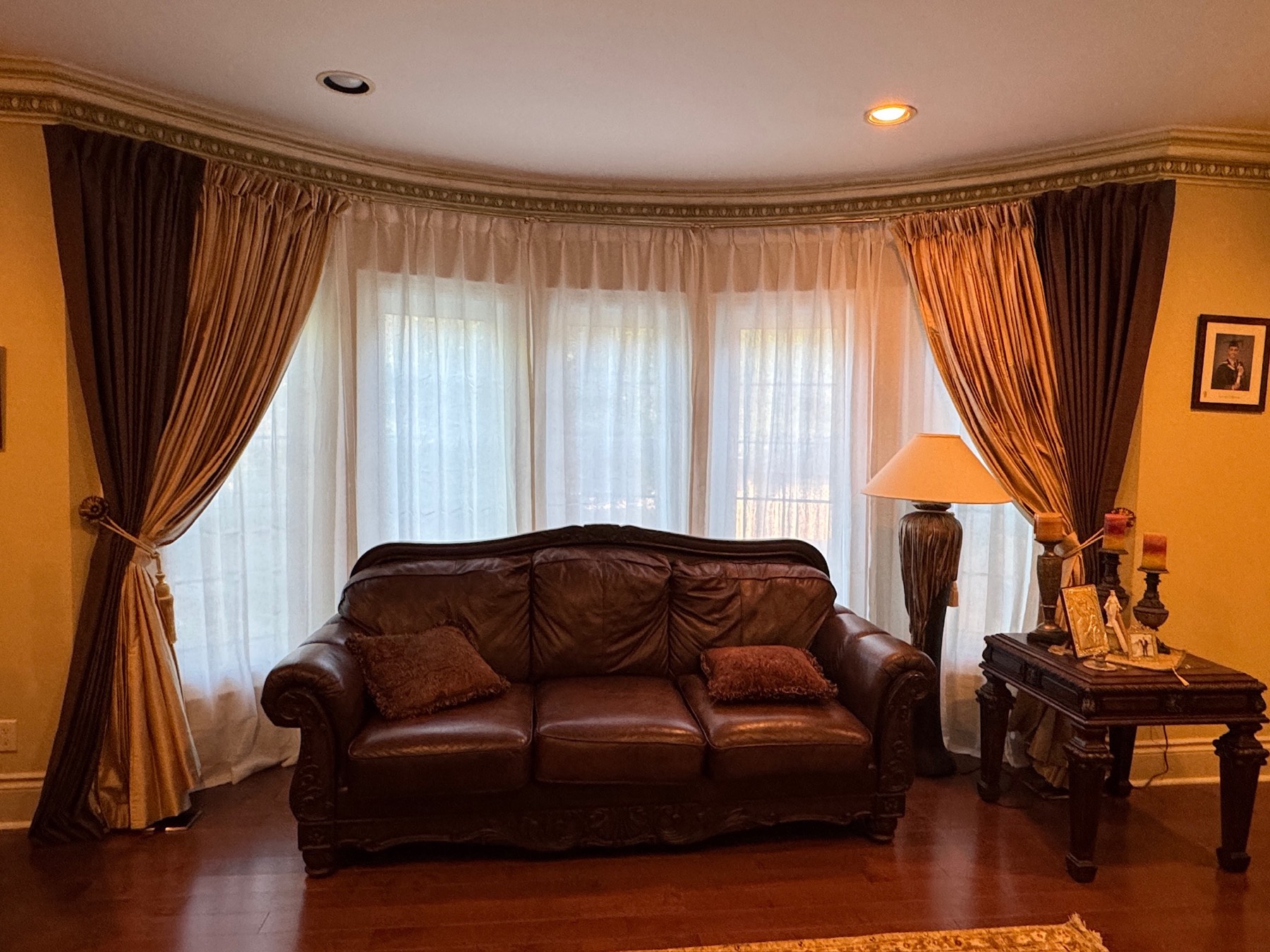
Drapery is the only window treatment we make that is soft. Everything else — blinds, shades, shutters — is a mechanism. Fabric behaves differently: it absorbs sound instead of reflecting it, it frames a window rather than filling it, and it gives a room a finished quality that a hard covering, however well fitted, does not.
The technique that does most of the work is layering. A sheer hung behind a drapery panel gives you soft, diffused daylight and privacy from the street during the day; drawing the outer panel at night gives you full cover and a warmer, quieter room. It is the single most useful thing to understand about drapery, and it is why most of the installations we photograph have two layers on the track rather than one.
The heading style sets how the fabric falls, and it is the decision that changes the look of the room most.
Fabric gathered into stitched groups at the top. The traditional, tailored heading — structured folds that hold their shape whether the panel is open or closed.
A continuous S-curve running the width of the track. Contemporary and uncluttered, and the heading that stacks back most compactly, which matters on a wide opening.
Metal rings that slide directly on a visible pole. Casual, simple to operate, and the most economical heading we make.
A sewn channel that threads onto the pole, gathering the fabric softly. Best suited to lightweight panels and sheers that stay largely closed.
Light-diffusing fabric that softens daylight and blocks the sightline from outside during the day. Hung alone or layered behind a heavier panel.
A dense lining sewn behind the face fabric. The right specification for bedrooms and media rooms, and the one that also does the most for heat and noise.
A structured header that conceals the track and finishes the top of the window. Traditional, and effective at hiding an awkward or uneven opening.
Drapery on a motorised track, operated by remote, app, or schedule. Especially worthwhile on wide or tall panels that are heavy to draw by hand.
We make custom drapery, curtains, and sheers to measure, and install them on track or pole. Much of our residential work layers drapery over a roller or zebra shade, so the two are specified together on the same visit.
Usually yes. A panel that stops short of the floor tends to look accidental. The three conventional finishes are a float roughly a centimetre clear of the floor, a kiss just touching it, and a break where the fabric pools slightly. We will show you the difference against your own window before the panels are cut.
Yes, and it is the most common request we get. A roller or zebra shade handles glare and blackout, while the drapery frames the window and softens the room. Layering also means the shade can stay up most of the time.
Blackout lining stops light through the fabric, but light still enters around the edges of any panel. For genuine darkness we either pair the drapery with a blackout shade in the recess or use a wrap-around track that returns to the wall. If the room is for shift work or a nursery, tell us and we will specify accordingly.
Yes. Motorised tracks work with battery or hardwired power and integrate with Google Home, Alexa, and HomeKit in the same way our motorised shades do. It is most worthwhile on heavy or hard-to-reach panels.
It depends on the fabric, and we give you the specific care instructions for yours on handover. Most lined drapery should be dry cleaned rather than washed, since washing can shrink the lining at a different rate from the face fabric and leave the panel hanging unevenly.
Free in-home consultation. No pressure, no obligation. Just expert advice and a quote you can trust.